Yangtze River
The Longest River in Asia
VEGETATION
The Amazon rainforest is home to the largest continuous stretch of tropical forest on Earth, producing about 20% of the planet's oxygen. Its dense vegetation regulates rainfall patterns, absorbs vast amounts of carbon dioxide, and sustains millions of species.
However, satellite observations of vegetation reveal alarming changes. Deforestation and human activities are reducing the forest cover, threatening biodiversity and weakening one of Earth's most important climate regulators.
FIRES
Fires can occur naturally or due to human activity, affecting forests, grasslands, and wildlife. In the Amazon, fires caused by deforestation and land clearing destroy forest and threaten countless species.
These fires also impact the Amazon River and its surrounding vegetation. Loss of forest cover reduces the rainforest's ability to regulate rainfall, which can alter river flow and increase sediment in the water. The weakened vegetation absorbs less carbon dioxide and disrupts the river ecosystem, affecting both wildlife and the communities that depend on the Amazon for food, water, and resources.
Record Low Water Levels
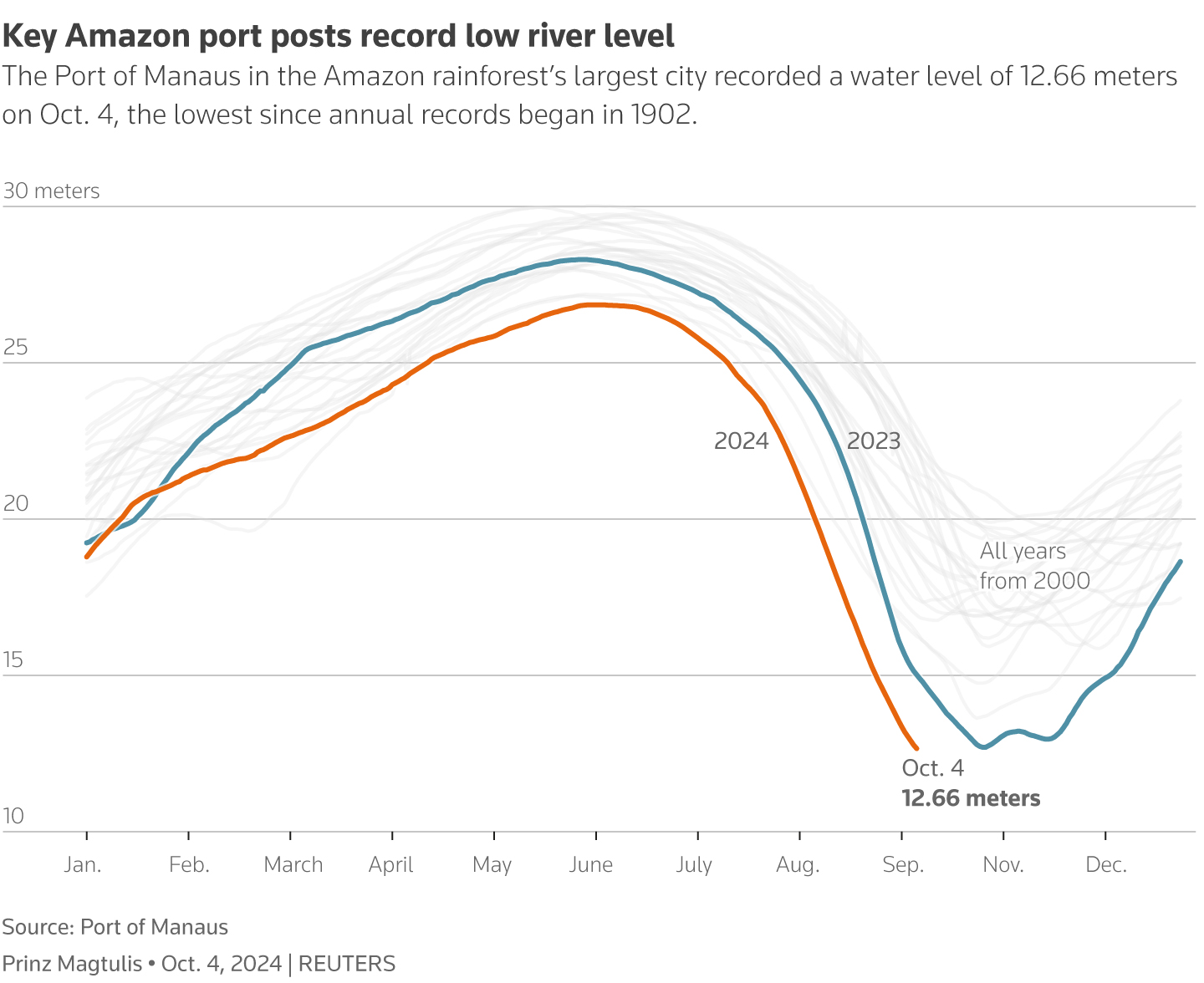
The Port of Manaus recorded a water level of 12.66 meters on October 4, 2024 - the lowest since records began in 1902. This severe drought is directly linked to deforestation and fires in the Amazon.
As trees are cut down, the forest loses its ability to generate rainfall. Less vegetation means less moisture, creating a dangerous cycle of drought and fire that threatens river transportation, communities, and wildlife throughout the region.
HUMAN ACTIVITIES
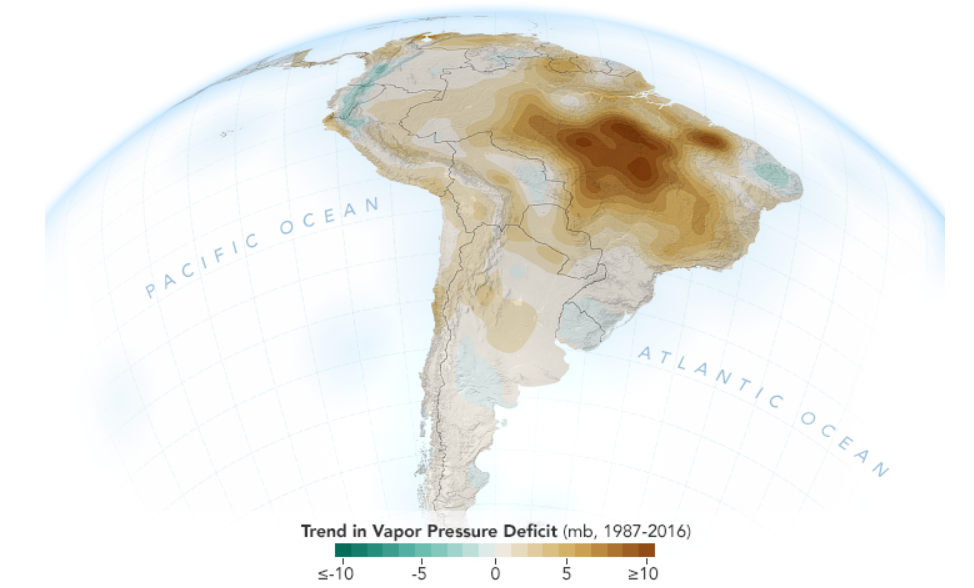
Over the past two decades, human activities such as forest burning for agriculture and global greenhouse gas emissions have increased atmospheric dryness over the Amazon.
This reduces rainfall and soil moisture, weakening the forest's ability to supply water to the Amazon River. Fires release aerosols like black carbon, which warm the atmosphere and disrupt cloud formation, further decreasing river flow and affecting aquatic life and local communities.